
Trusting in an Unknown Future
Reflecting on the Third Sunday after Pentecost: Two Days after Sunday (Year A)

Scripture
Semicontinuous - Psalm 126; Genesis 25:7-11; 2 Thessalonians 2:13—3:5
Complementary - Psalm 105:1-11, 37-45; 1 Samuel 3:1-9; 2 Thessalonians 2:13—3:5
(What are semicontinuous and complementary readings?)
___
Prayer
Through dreams and visions, O God, you broaden the horizon and hope of your people, that they may discover the meaning of your covenant, even in the midst of trial and exile. Increase the number of those who believe in your word so that all people may joyfully respond to your call and share in your promises. Amen. (Revised Common Lectionary)
___
Reflection
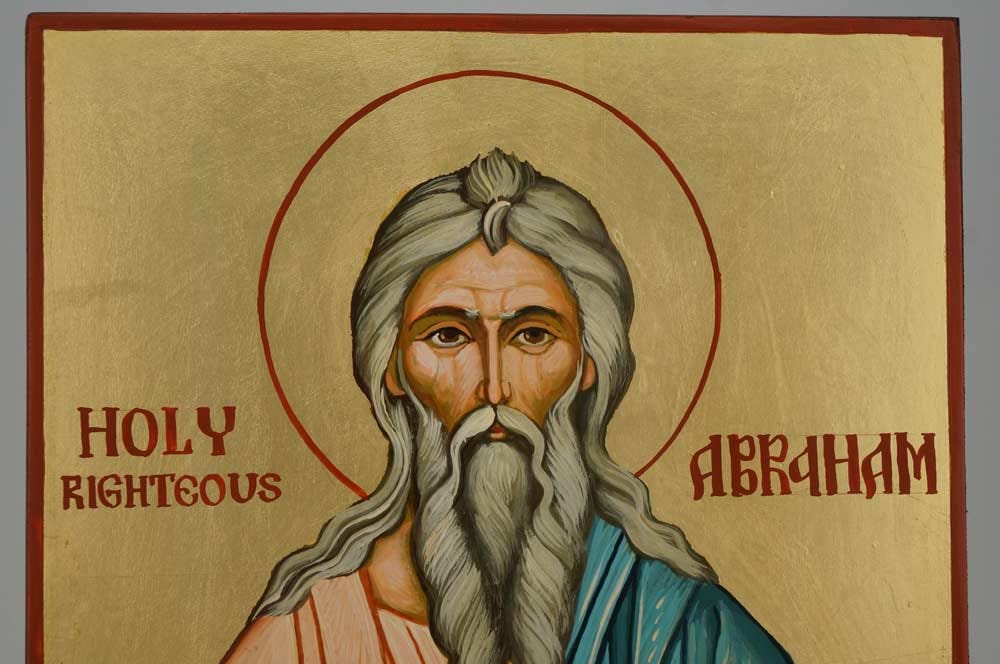
At first glance, the passage feels like a brief obituary. Abraham lived 175 years, breathed his last, and died at a good old age, “an old man and full of years.” His sons Isaac and Ishmael came together to bury him in the cave of Machpelah, the burial place Abraham had bought years earlier for Sarah. After Abraham’s death, God blessed Isaac and Isaac lived in the land. The story is short, but it is a turning point in the bigger story of God’s covenant with his people.
If we look at Abraham’s whole life, his death is at the end of a very faith-filled life. Abraham left his homeland in Genesis 12 and went to a land which God would show him. Abraham didn’t know where he was going, but he was sure that God would do what he said. He believed God’s promise that he would be the father of many nations, but there were times of doubt and impatience. Abraham was not perfect, but his story is one of faith as a whole—one of trust, questions, obedience, and growth.
The significance of Abraham’s death takes place in light of the promises God made to him in the beginning. Abraham was promised land, descendants, and blessing. At the time Abraham died, he possessed very little of the promised land except for a burial plot. He had Isaac, the promised son, but his descendants were not yet a great nation. The blessing that would eventually reach all nations was still unfolding. In other words, Abraham died without the fulfillment of God’s promises. But he died trusting that God would accomplish what he had said. Faith is not simply believing God for what happens in our lifetime. Sometimes faith is about trusting God with a future that we will never be able to know personally.
Another interesting detail is that Isaac and Ishmael are reunited at Abraham’s funeral. They had been fighting and at times apart in Genesis; they had been in conflict and separation too. But now they are together at the funeral, both honoring their father. There is a brief moment of reconciliation and family unity. Abraham’s influence transcended a single branch of his family.
The final verse shifts attention from Abraham to Isaac. God’s blessing doesn’t end with Abraham’s death. The covenant continues. Throughout the Bible, we see that God’s purpose is larger than one person. Leaders come and go, generations rise and fall, but God’s promises move forward. We may play only a small role in God’s larger story, but our faithfulness contributes to what God is doing across generations. St. Augustine writes,
After Abraham’s death, the divine promise did not fail, for it was renewed in Isaac, who was blessed with the inheritance of the covenant. Thus the patriarchs, though they die, do not interrupt the succession of God’s plan, for the promise passes on through their seed (St. Augustine, City of God, Book XVI, Chapter 32).
The recording of Abraham’s death is the end of one chapter and the beginning of another. Abraham’s life ends, but God’s covenant story is going on and the God who called Abraham remains faithful from one generation to the next.
PRAYER: O God, from whom all good proceeds: Grant that by your inspiration we may think those things that are right, and by your merciful guiding may do them; through Jesus Christ our Lord, who lives and reigns with you and the Holy Spirit, one God, for ever and ever. Amen. (Book of Common Prayer)
___